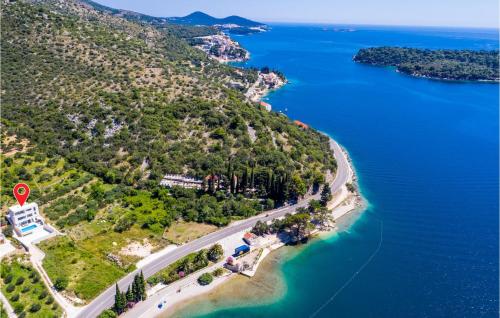
The route in plain terms
Zaton and Slano sit about 20 kilometres apart on the coast northwest of Dubrovnik, on either side of the narrow inlet at Zaton. The direct road is the D8 magistrala, which climbs away from Zaton Veliki past the turning for Zaton Mali, runs above the shore through the villages of Trsteno and Orašac, and drops into Slano bay. Trsteno is the halfway marker most people know, mostly for its Renaissance arboretum above the road. By car the run takes roughly 25 to 30 minutes outside the July and August crush; in high season, with coaches and day-trippers, allow 40.
Buses on this stretch are regional rather than dedicated shuttles, so timetables follow the coastal Dubrovnik–Split corridor rather than a commuter rhythm. In practice you are looking at a handful of departures a day, more in summer, fewer in winter, and almost nothing on Sundays outside the season. Check the current schedule a day or two before travelling rather than relying on a printed notice from a previous year. Stops are signposted but unstaffed, and tickets are usually bought from the driver.
Getting to the stop at each end
On the Zaton side, the practical boarding points are along the main road above the bay rather than down at the water. Zaton Veliki and Zaton Mali both have roadside stops near the church and the small harbours, but the more reliable pick-up is on the magistrala itself, where intercity coaches actually pause. From most Zaton accommodation the walk up to the main road is ten to fifteen minutes with some gradient; taxis are scarce, so ask your host which stop matches the departure you want and leave a buffer.
In Slano, coaches stop on the D8 above the bay, a short downhill walk from the waterfront and the Hotel Admiral area. The village is compact: the stop, the beach, the little harbour and the main cluster of restaurants and rooms are all within about ten minutes on foot. If you are carrying luggage or arriving in the heat of the afternoon, that hill back up to the road is worth remembering when you book a return departure. Dubrovnik's main bus station at Gruž is the interchange for anyone coming from the city first.
What you gain by stopping halfway
The strongest argument for taking this slowly is Trsteno. The arboretum, one of the oldest gardens on this coast, sits directly above the magistrala and can be reached from the roadside stop by a short climb. Plan two hours including the walk down to the small harbour and back. From there you can continue to Slano on a later coach, or walk part of the old path towards Orašac if you are steady on your feet and the weather is not too hot. Spring and early June are the comfortable months for this; August afternoons are punishing.
Slano itself is a working bay rather than a resort strip. The Franciscan monastery and the long shingle beach at the head of the inlet are the two anchors, with the beach shelving gently enough for children. It is quieter than Lapad or the crowded east side of Dubrovnik, which is exactly the appeal for travellers who want the city within reach but not on top of them. Evenings are short on entertainment — a handful of konobas, a promenade, dark water.
Which base to book, and when
For a first Croatia trip built around Dubrovnik, I would book Slano rather than Zaton. It gives you more rooms across the price spectrum, a proper village centre, two beaches and a wider choice of places to eat, and it still puts you 30 to 40 minutes from Gruž by road. Slano also opens up the Pelješac peninsula and the Ston oyster beds for day trips without doubling back through the city. Book a sea-facing room in the bay if you can; the difference between a view of the water and a view of the car park is worth paying a little more for.
Zaton suits a different trip: families with a car, or travellers who want to be close to Dubrovnik old town — roughly 15 minutes by road — while sleeping somewhere with a beach and a village feel. Choose Zaton Mali for shade and the small harbour, Zaton Veliki for a wider spread of restaurants. May, June, September and early October are the sweet spots on both sides: warm sea, functioning timetables, no fighting for a seat on the coach. Skip July and August if you can be flexible.
Related articles
Good to know
Questions, answered
How long does the bus from Zaton to Slano take?
Roughly 30 to 40 minutes depending on how many stops the coach makes between Zaton, Trsteno and Orašac. Traffic on the D8 magistrala in July and August can add 10 to 15 minutes, so leave a margin if you are connecting onwards at Slano.
Do I need to book bus tickets in advance?
No. On this stretch you buy from the driver, and seats are rarely a problem outside peak summer weekends. What you should do is confirm the day's departures in advance, because the timetable is thin and there may be only two or three usable coaches in each direction.
Is there a direct bus from Dubrovnik to Slano?
Yes. Coaches on the coastal corridor towards Split pass through Slano, and some Dubrovnik suburban services cover part of the route. From Gruž bus station the drive is about 30 to 40 minutes. Check whether your coach stops above the bay or continues without pausing.
Should I stay in Slano or Zaton for a Dubrovnik holiday?
Slano for space, beaches and a village centre with more choice of rooms; Zaton if you want to be closer to Dubrovnik old town, around 15 minutes by road. Both are quiet. Slano has the broader accommodation range and better onward links to Pelješac and Ston.
When is the best time of year for this part of the coast?
Late May to mid June and September to early October. The sea is warm, the coaches run a fuller timetable, and the magistrala is not yet jammed. July and August bring heat and traffic, and winter reduces departures to a minimum, so always re-check schedules.
Can I visit the Trsteno arboretum on the way?
Yes, and it is the best reason to break the journey. The garden sits just above the main road near the Trsteno stop. Allow about two hours for the arboretum and the short walk down to the harbour, then pick up a later coach to Slano.
Do I need a car if I base in Slano?
Not for beaches, restaurants and the village itself. A car helps for Ston, the Pelješac wine roads and quieter coves. Without one, rely on the coastal coaches and a taxi for the odd late evening; there is no ride-hailing coverage worth counting on.
What should I skip on this route?
Skip trying to see Zaton, Trsteno and Slano in a single day on public transport in high season — the timetable will not cooperate. Also skip the midday walk between Zaton's harbours in August, which is exposed and steep in places.
Doing good is the business: every booking through Stay Dubrovnik funds one verified tonne of carbon removal — same room, same price, no markup.
Search stays